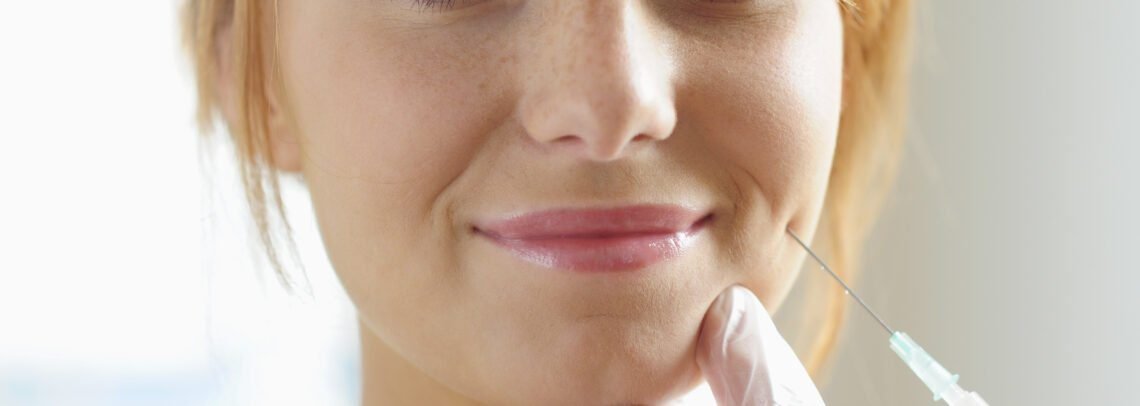
You’ve probably heard the term “facelift” and immediately pictured scalpels, stitches, and weeks of recovery. But that’s actually quite far from the truth. That’s not what a non-surgical facelift offers. It offers several benefits. And the best part? No surgery. No general anesthesia. No overnight hospital stays.
But there are a few things you need to know before jumping in. In this blog, we’ll be covering:
So, without further delay, let’s get into it!
A non-surgical facelift is a procedure that temporarily refreshes, firms, and plumps the skin on your face. It uses a combination of minimally invasive and non-invasive techniques to give you a younger, smoother appearance.
Unlike a traditional surgical facelift, which involves large incisions and muscle adjustments, non-surgical options get you in and out of the doctor’s office quickly, with little discomfort and minimal downtime.
People who are concerned about aging skin and want a visible improvement without surgery are ideal candidates. Specifically, a non-surgical facelift can help with:
It’s not for everyone. You should speak to your doctor before pursuing this treatment if you have:
NOTE: Non-surgical treatments may not be effective for deep wrinkles, severely sagging skin, or significant scarring. For those concerns, a surgical option may be more appropriate.
Botox is one of the most popular components of a non-surgical facelift. It temporarily relaxes the muscles that cause wrinkles. Most commonly used between the eyebrows, on the forehead, and at the corners of the eyes. It smooths lines associated with repetitive facial expressions. And the results typically last up to three months.
Dermal fillers are gel-like substances often made from hyaluronic acid (HA) that are injected to restore lost volume along:
NOTE: Results can last anywhere from six months to over a year.
Fat injections are a slightly more invasive option. Fat is extracted from another area of your body through liposuction, processed, and then reinjected into the face to restore youthful volume and contour. Since living fat cells integrate with existing tissue, results can last for years.
Intense beams of light are directed at specific areas of the face. This removes the older, outer layers of skin while also stimulating collagen production deep within. As a result, the skin becomes smoother, firmer, more even-toned skin.
. Chemicals are applied to the skin to remove its top layers, revealing newer, firmer skin beneath. Chemical peels reduce:
NOTE: Multiple sessions are usually required for optimal results.
Tiny, fine needles create small, controlled wounds in the skin. This stimulates the production of collagen and elastin. These two proteins are responsible for keeping your skin firm and elastic. It improves loose skin, wrinkles, large pores, and sun damage. Results appear over three to six months.
A gentle, non-invasive treatment that sands away the outer layers of the skin using a rough exfoliating pad. It reduces fine lines, mild scars, and uneven skin texture. Multiple treatments are usually needed, spaced a few weeks apart.
| Pros of a Non-Surgical Facelift | Cons of a Non-Surgical Facelift |
|
|
Most non-surgical facelift treatments are generally safe, but side effects can include:
NOTE: In very rare instances, botulinum toxin and dermal fillers can cause fever, headache, nausea, or skin rash. Always consult a qualified professional before any procedure.
It depends on the treatment. Here’s a quick overview:
Your doctor may recommend a combination of treatments along with a healthy skincare routine. Here’s what helps:
Read More:
8 Skin Tightening Treatments That Actually Work in 2026
To Conclude
A non-surgical facelift is a powerful, flexible way to refresh and rejuvenate your appearance without the risks, cost, or downtime of surgery. Whether it’s a quick Botox session, a round of dermal fillers, or a course of microneedling, there’s an option for almost every skin concern.
© Copyrights 2026 Pure Perfection MedSpa. All rights reserved.
Powered by DevZeo


